
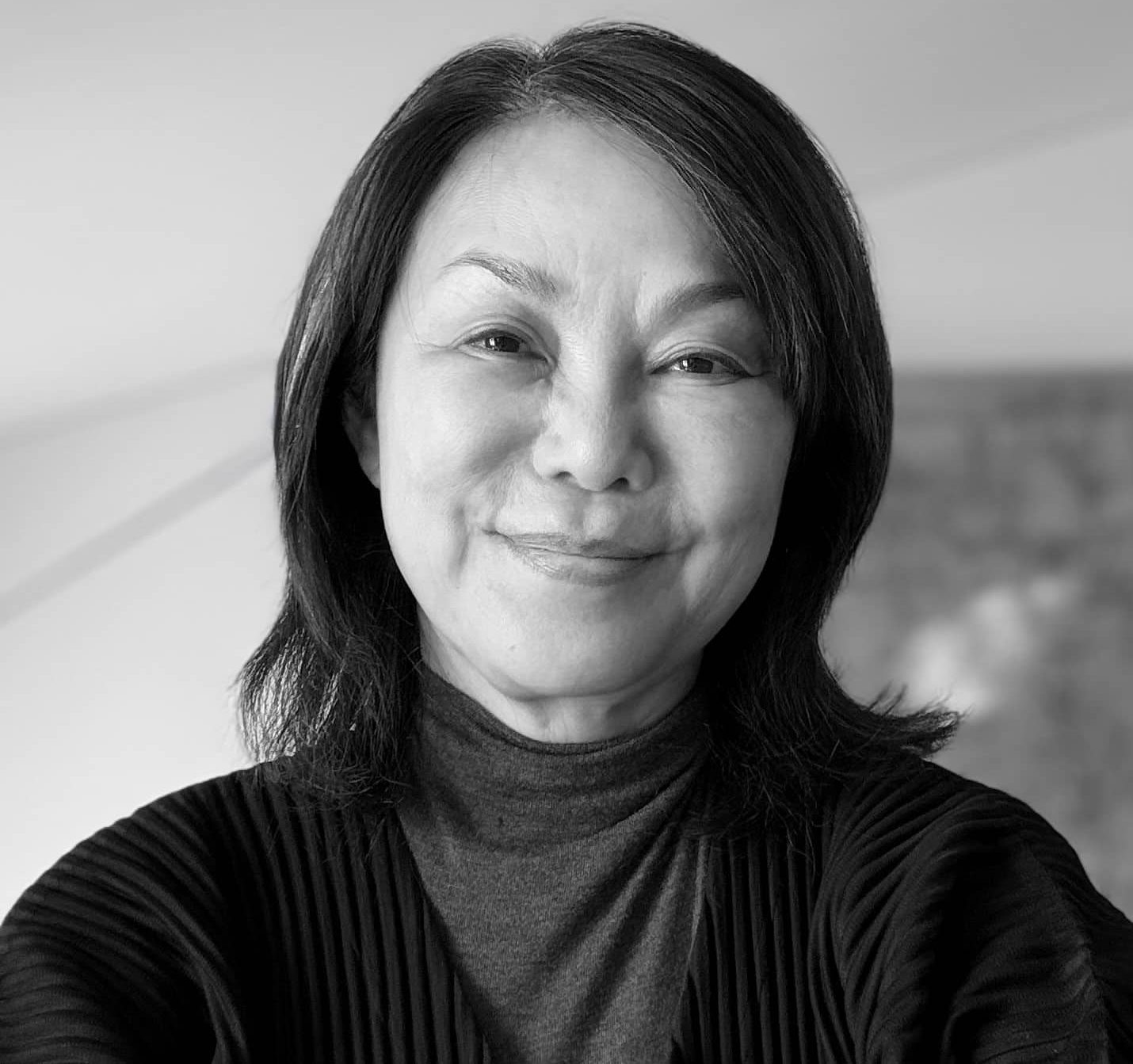
A street-level perspective on downtown can be transformative in myriad ways. Just ask entrepreneur, CEO and keynote speaker for the 2026 State of Downtown, Julia Y.C. Huang.
One of the best moves that Julia Y.C. Huang ever made was associating her multicultural creative agency, Intertrend Communications, with a cult.
Maybe that needs some explaining.
In 2015, Intertrend moved into a building that is still known today as the Psychic Temple of the Holy Kiss. Constructed in 1905, it’s the second oldest commercial building in Long Beach, CA, where Intertrend is headquartered, and was once home to William C. Price’s Society of New or Practical Psychology, also known as The Holy Kiss Society.
“To make a very strange and long story short, he charged women $1 to kiss him,” Huang laughs. “That’s why it’s called the Holy Kiss. And no developer would touch it because the land was more valuable than the historic building that was on top of it.”
As a wry nod to the building’s bizarre early history, the City of Long Beach would end up selling the abandoned, earthquake-damaged brick building to Intertrend and their development partner JR van Dijs, Inc. for $1. Over many years, the two partners restored and reinforced the locally designated landmark. Intertrend ultimately occupied the ground floor.
Although the project budget ended up exceeding that too-good-to-be-true purchase price by a fair margin, the renovation marked a turning point for Huang and the award-winning agency she had founded in 1991.
“It made us go from a high rise to street level,” she says. “We were no longer perched on top of a ten-story building. And we started to engage with the city at street level and have a more robust engagement with the community. That was the first engagement that we started to have as a business with the city — rather than just, you know, paying rent.”
With their new street-level perspective, it became evident to Huang and her colleagues just how much qualities like walkability strengthened their sense of connection to Long Beach’s downtown. Intertrend began sponsoring and organizing a mural festival known as Long Beach Walls. They also started hosting more events and collaborating more with their neighboring businesses.
Where once there was a dilapidated, disused building, there was suddenly new life.
“We’re a very community-oriented and big-picture-oriented business. As a business, we put a lot of money into community building and arts and culture for the City of Long Beach,” she says.
“But I always say that it didn’t come entirely from altruistic objectives. It came from the fact that if the downtown was strong, it was easier for us to recruit people. It was easier for us to increase the value of the real estate that we purchased. So, to a certain degree, placemaking, making the community better, and the flourishing of the city is good for our employees and good for business.”
In Huang’s opinion, one important way to contribute to that flourishing is through outside-the-box public–private partnerships, like the one that helped them purchase and transform the Psychic Temple. That’s where she sees some potential parallels between Long Beach and Spokane.
“Like Long Beach, the public sector in Spokane has been putting a lot of effort into placemaking. Which is very easy to talk about, but to put money behind it and to create that collaboration between public sector and private sector is not always an easy feat.”
And while ambitious public–private partnerships can be part of a long-term strategy, there are speedier options with more immediate impact. Activations, such as pop-up events and markets, can introduce vibrancy and add to the character of a thriving downtown. Even in sprawling megalopolises like Taiwan, Tokyo and Taipei, which Huang knows well, she says that life at human scale is still very much on display amid the traffic and skyscrapers.
“I think that when the city becomes more walkable, the engagement becomes very, very different. So the question is, how can you create those pockets of walkable community that allows for person-to-person engagement? That’s what we’ve been doing in our own pocket of downtown Long Beach,” she says.
Drawing on her own experience as an entrepreneur and an advertising executive, Huang stresses that it’s equally important to remember that not everything is guaranteed to work. Some events might fizzle. Some partnerships might not pan out. A great proposal might not meet with instant acceptance.
“It’s very easy, especially in placemaking, for us to say, ‘Oh, this event won’t work or this concept won’t work.’ But a city or a business or an individual should not be afraid to pivot. If one idea fails, it doesn’t mean that the idea is not a good one. It might just need to be shelved for a little while or have a bit of modification.”
And recognizing when to press ahead with an idea and when to save it for another day can benefit from some street-level insight.
“Spokane is very beautiful,” says Huang. “But if you’re always in a high rise and looking down, so to speak, it’s just a view. At street level, especially as a business owner, you start to engage with the city and want to give back.”